
Choosing the right solar power system for your home or business is the most important decision you’ll make on your journey to energy independence. Whether you’re aiming to reduce your electricity bills with a grid-connected system, achieve complete self-sufficiency with an off-grid setup, or combine the best of both worlds with a hybrid solution, a meticulous design process is essential for success.
This guide will walk you through the key considerations for each system type and provide a step-by-step procedure to ensure your solar installation is efficient, safe, and perfectly suited to your needs.
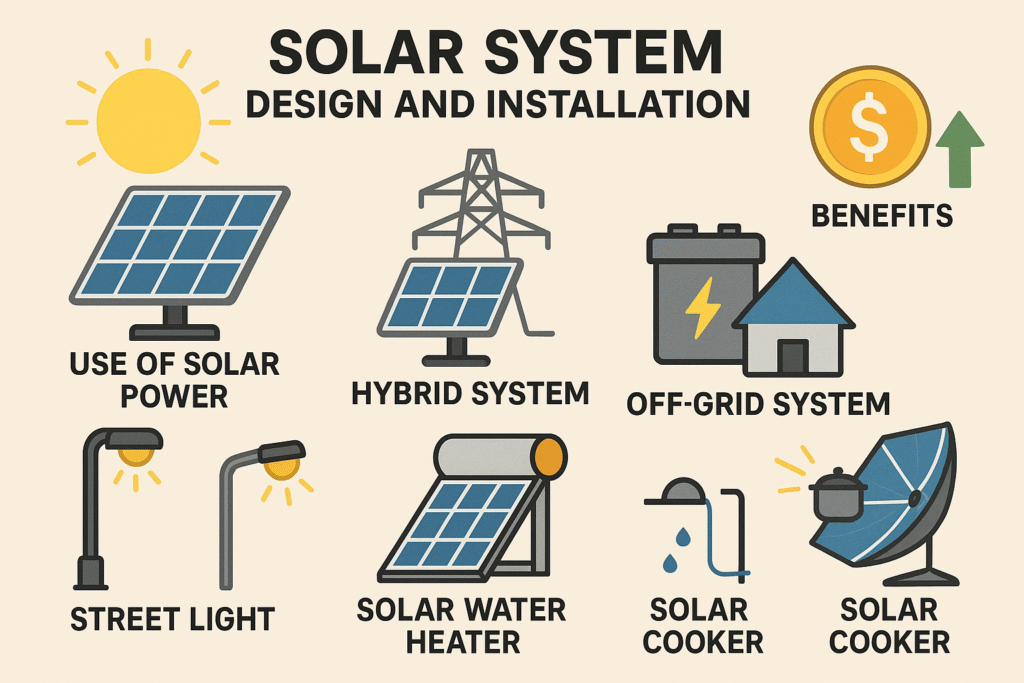
1. Important Considerations for On-Grid Solar Systems
An On-Grid solar system (also known as a grid-tied system) is connected to your local utility grid. It’s the most common and cost-effective option for most residential and commercial properties.
Key Design Points:
- Energy Consumption Analysis: The primary goal is to offset your electricity usage. You need to analyze your monthly and daily energy consumption patterns from past electricity bills to determine the system size in kilowatts (kW) that can meet or exceed your needs.
- Site and Roof Assessment: The efficiency of your system heavily depends on the location of your solar panels.
- Shading: Any shade from trees, chimneys, or neighboring buildings can drastically reduce a panel’s output. A thorough shading analysis is vital.
- Orientation and Tilt: Panels facing south (in the Northern Hemisphere) with an optimal tilt angle will produce the most energy. Your roof’s pitch will dictate the ideal panel arrangement.
- Roof Condition: Ensure your roof is in good condition and can structurally support the weight of the solar panels and mounting equipment.
- Local Regulations and Net Metering: Your system design must comply with local building codes and utility company regulations. Understanding net metering policies is crucial, as they determine how you are credited for the surplus energy your system exports to the grid.
- Component Selection:
- Inverter: String inverters are common, but micro-inverters or power optimizers are excellent for layouts with shading issues, as they allow each panel to operate independently.
- Solar Panels: Mono-crystalline panels are generally more efficient and take up less space, while poly-crystalline panels are more budget-friendly.
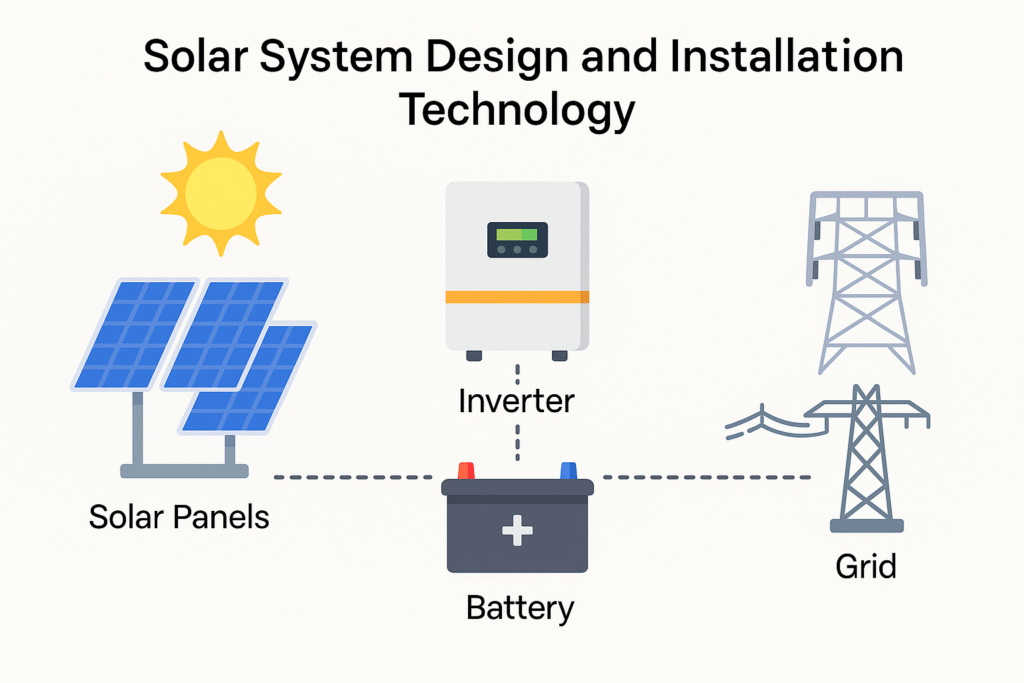
2. Important Considerations for Off-Grid Solar Systems
Key Design Points:
An Off-Grid solar system is completely independent of the utility grid. It’s the perfect solution for remote locations or anyone seeking total energy independence.
- Comprehensive Load Analysis (Most Critical Step): Since you have no grid backup, accurately calculating your daily and hourly energy consumption is non-negotiable. You must list every appliance, its wattage, and how many hours it will run per day to determine your total daily energy requirement in Watt-hours (Wh) or Kilowatt-hours (kWh).
- Days of Autonomy: This refers to the number of consecutive days your system must power your home without any sunlight (e.g., during cloudy or stormy weather). This factor directly determines the required size of your battery bank.
- Backup Power: For extended periods of low sunlight, a backup generator (gasoline, diesel, etc.) is often integrated to charge the batteries and supply power to critical loads.
- Component Sizing:
- Battery Bank: Sizing is based on your total daily energy consumption and the desired days of autonomy. Choosing the right battery technology (e.g., lithium-ion vs. lead-acid) is vital for performance and longevity.
- Charge Controller: This device regulates the power flow from your solar panels to your batteries, preventing overcharging and protecting your battery bank.
- Inverter: The inverter must be sized to handle the peak surge power of your most demanding appliances (e.g., a refrigerator or washing machine starting up).
3. Important Considerations for Hybrid Solar Systems
A Hybrid solar system combines the advantages of both on-grid and off-grid systems. It stays connected to the grid for backup while also using batteries to store excess solar energy.
Key Design Points:
- Balancing Grid and Battery Use: You can program the hybrid system to prioritize using solar energy first, then the battery bank, and finally the grid. This allows you to avoid peak-hour electricity rates and reduce your reliance on the utility company.
- Sizing for Critical Loads: A hybrid system can be designed to power only essential loads (e.g., lights, refrigerator, medical equipment) during a power outage, allowing you to use a smaller, more affordable battery bank while still having crucial backup power.
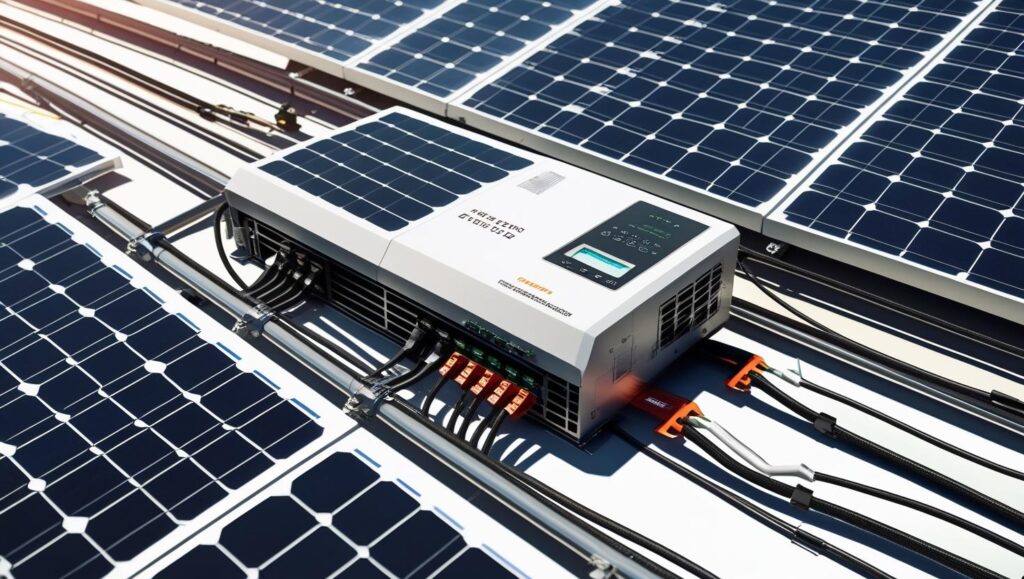
- Hybrid Inverter Functionality: The heart of this system is the hybrid inverter, which manages power flow from the solar panels, batteries, and the utility grid seamlessly.
- Backup and Flexibility: The system offers the security of a grid connection while providing energy storage for self-consumption and power outage protection.
Step-by-Step Design Procedure for Your Solar System
Regardless of the system you choose, the design process follows a clear set of steps:
- Conduct a Load Analysis: Create a detailed list of all electrical appliances and their energy consumption to determine your total daily energy needs. This is the foundation of your entire system.
- Perform a Site Assessment: Evaluate the solar potential of your property. Look for shading issues, measure roof dimensions, and determine the best orientation and tilt for your panels.
- Size Your Components: Based on your energy needs and site assessment, calculate the required number of solar panels, the capacity of your battery bank, and the appropriate size of your inverter and charge controller.
- Plan the System Layout: Create a physical layout plan for where each component will be installed. This includes the solar panels on the roof and the battery bank and inverter in a cool, well-ventilated area. Proper wiring and cable sizing are critical to minimize energy loss.
- Navigate Regulations and Permits: Work with your solar provider to secure all necessary permits and approvals from local authorities and utility companies.
- Ensure Professional Installation: Always choose a qualified and experienced installer. A professional installation ensures that your system is not only performing at its best but is also safe and compliant with all regulations.
By following these steps, you can be confident that your new solar power system will deliver reliable, clean, and cost-effective energy for years to come.